

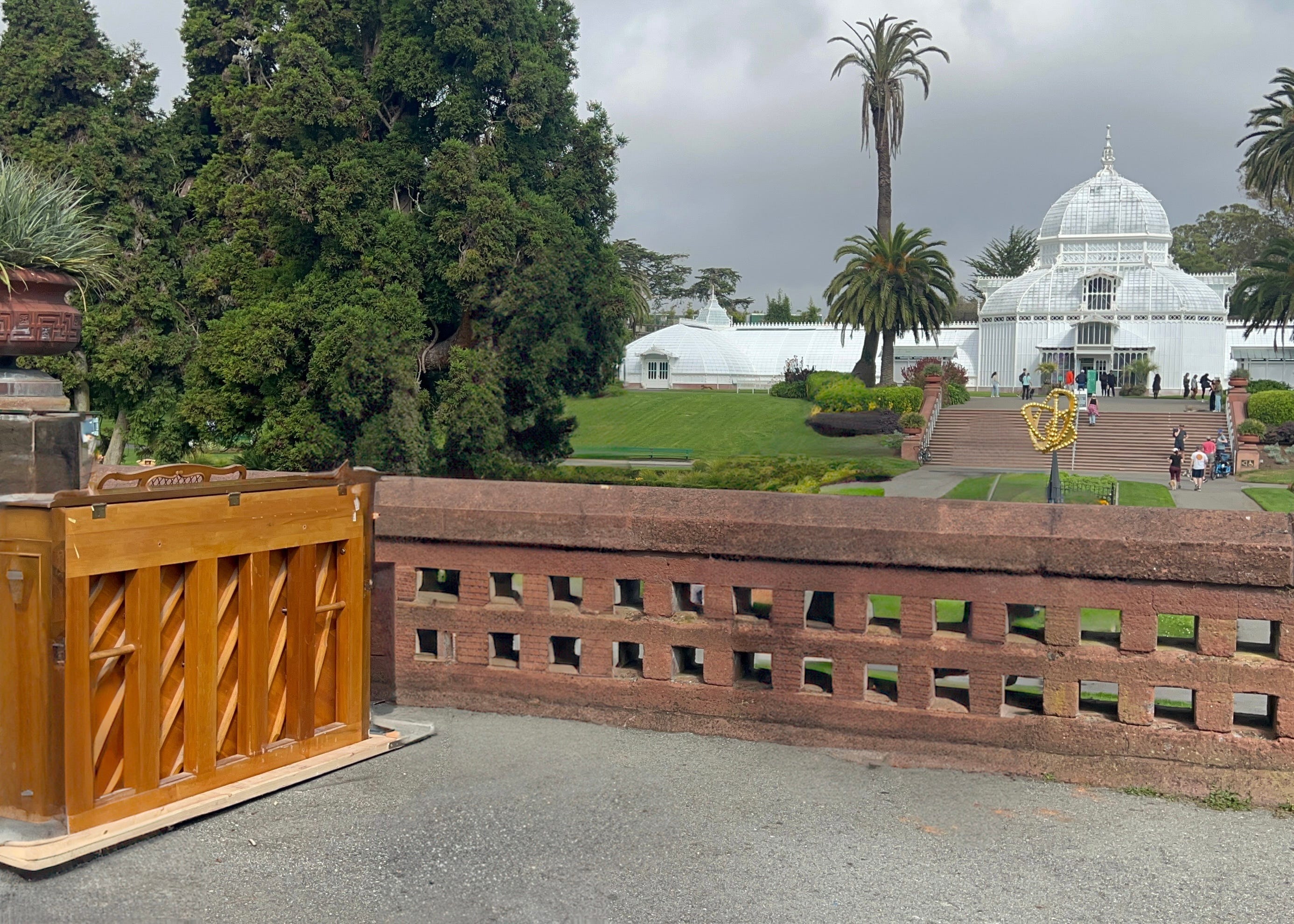
On her 97th birthday, my grandmother gathered her strength to rise from her wheelchair and stand proudly beside the piano overlooking the Conservatory of Flowers. “Remember me,” she said, her voice both gentle and commanding. “This is how I want you to remember me.” I looked away, tears welling. Of course I’ll remember you. It was touching to see her present herself in her own power and independence, not wanting her frailty to overshadow her presence.
That moment stayed with me. Towards the end of life, we all want to be remembered. But perhaps even more, we want people to really get to know who we are.
The stories that tether us
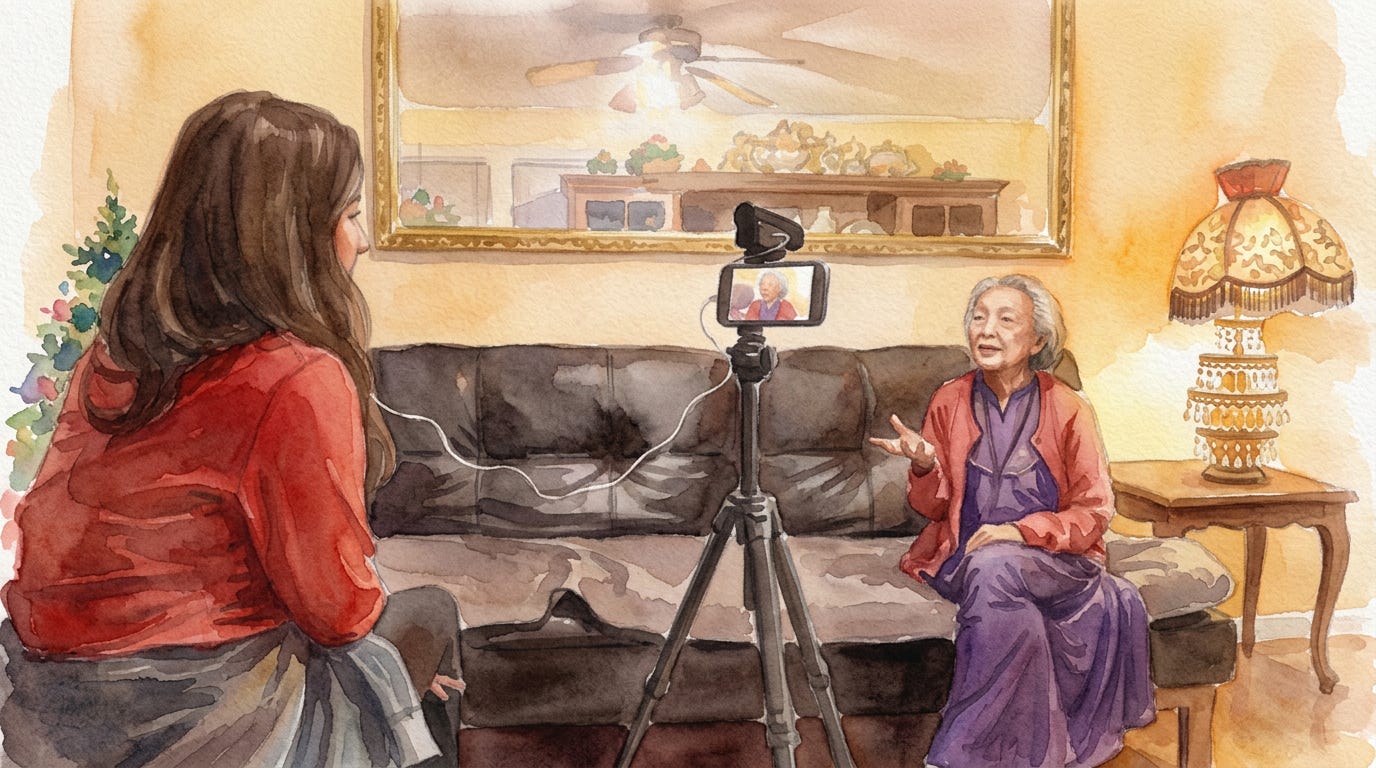
Two months later during a recent solo Thanksgiving trip back to California, my grandmother told me she had an urgent need to pass on our family stories: how her parents met, how she met my grandfather, and what it was like to raise a family in her time. She didn’t want these stories to be lost. So, with guidance and technology from my younger sister and brother-in-law, I recorded our conversations.
For someone who often stayed in the background during family gatherings, it was quite an experience. She looked right at me — truly saw me — and shared hours of memories. It was probably the longest conversation I’d ever had with her, and I cherished every minute.
That experience opened my eyes to something bigger: stories aren’t just entertainment. They are how we construct meaning, significance, and belonging. Research from social psychologists such as Dan McAdams shows that humans make sense of their lives through narrative identity — the internal story we tell about who we are and how we connect to others. And as Brené Brown’s work on belonging also reminds us, true belonging comes not from simply fitting in, but from being known and accepted as we are. When we share stories, we strengthen not only memory, but also our sense of significance and shared humanity.
Fading photos and fading memories
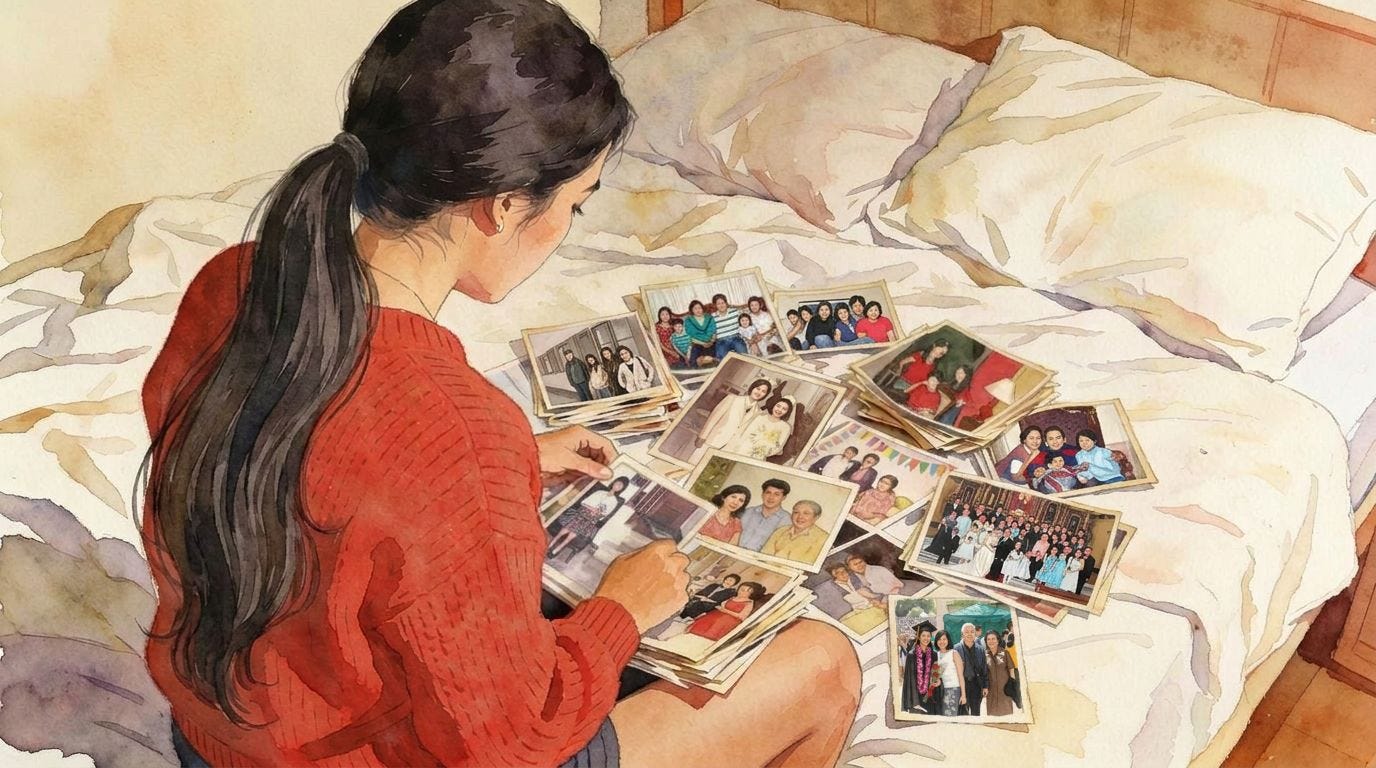
Later that same trip, I flipped through old family photos. I loved seeing myself surrounded by cousins and grandparents, our faces radiating laughter and warmth — yet I realized I couldn’t recall many of those moments. Where was I, really? What were we doing? Why couldn’t I remember the feeling?
My memories of the past are fading over time. Because I spent so much of my life away from much of my immediate family, I also lost something else: the stories told and retold at family gatherings — our oral history that fills us with nostalgia, helps us remember, and reminds us how we belong to one another. Psychologists call this collective reminiscing, and it plays an important role in emotional bonding and identity.
I cherish those moments more now and want to hold onto them as tightly as I can. How can I preserve these memories before they slip further away? These stories feel like part of what remains of my existence. They show me how I am connected to other people. I look back at these photos with longing, wanting not only to remember the moment, but to recover the sense of belonging I imagine I once felt so naturally.
The Value of Storytelling
What I’m carrying forward now is a deeper understanding of why stories matter. I now understand the value of taking the time to share my stories instead of letting them go unspoken, so others can really see me, my significance, my experiences, and the lessons I’ve carried through my life. Thanks to Vinh Giang’s STAGE Academy, I’m practicing how to bring stories into everyday conversation, and I’ve noticed that when I do, people lean in more, stay longer, and connect more deeply.
At the same time, I want to keep making space to hear other people’s stories, because I see how much there is to learn when we let someone speak from their own lived experience. There is something powerful about understanding one another this way, not just as individuals passing through life, but as people whose lives overlap, influence one another, and shape the communities we belong to. When we share stories, we don’t just exchange memories; we build belonging.
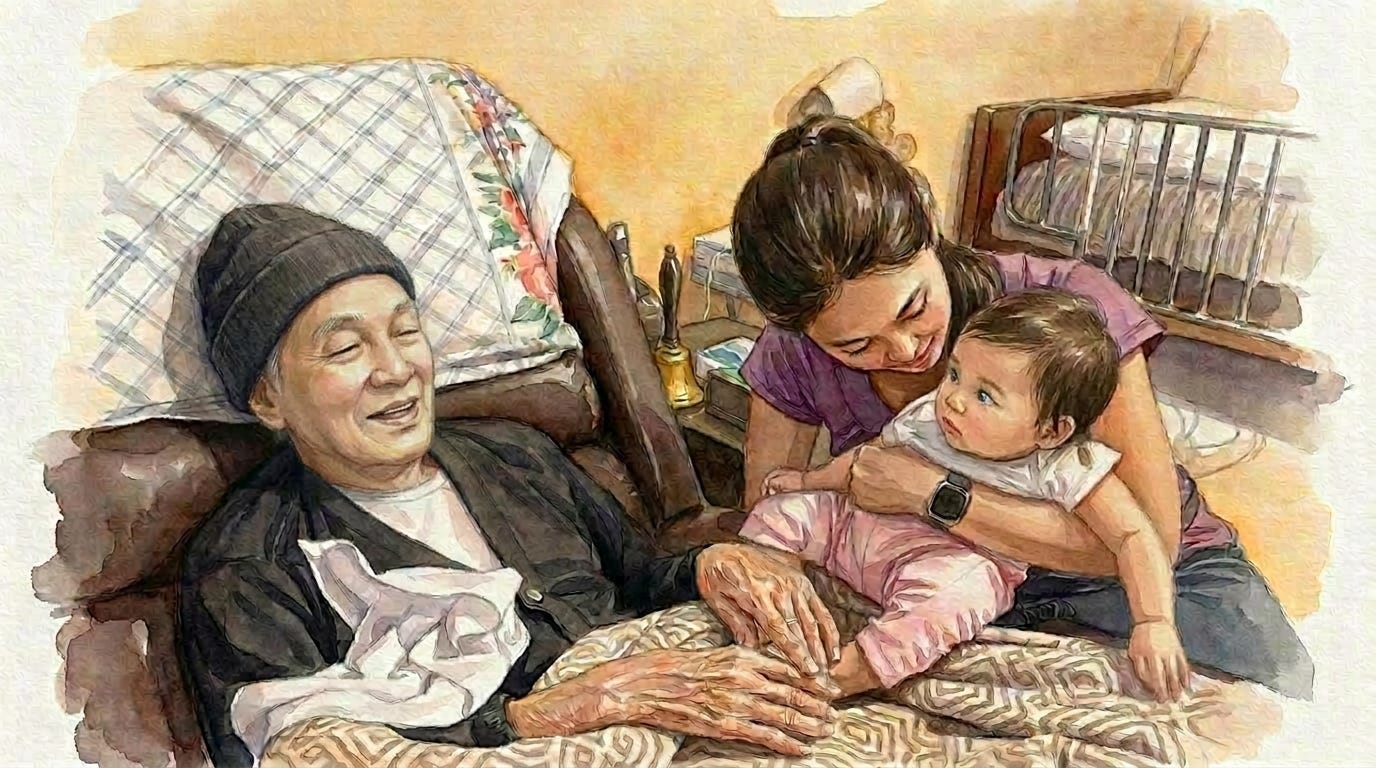
I want my children to know me the way I am grateful my grandparents allowed me to know them, not just as a parent, but as a whole person with a history, a voice, and experiences worth passing on. I want them to grow up surrounded by stories that help them feel rooted, connected, and seen. Because in the end, what makes life meaningful isn’t just achievement or success, it’s the imprint we leave on each other’s lives, and the way our stories help us belong to something bigger than ourselves.
Resources:
Dan McAdams on narrative identity: https://www.psychologytoday.com/us/blog/quantum-leaps/201907/how-rewrite-your-past-narrative
Brené Brown on belonging: https://ideas.ted.com/finding-our-way-to-true-belonging/
Collective memory overview: https://www.betterhelp.com/advice/memory/collective-memory-explained/
Vinh Giang’s Free Masterclasses: https://www.vinhgiang.com/virtual-events/